Inside mineralised air: what brine and brushwood actually produce
Magnesium, calcium and potassium do not behave like table salt. A look at what leaves the brushwood, how large the particles are, and why particle size decides everything.
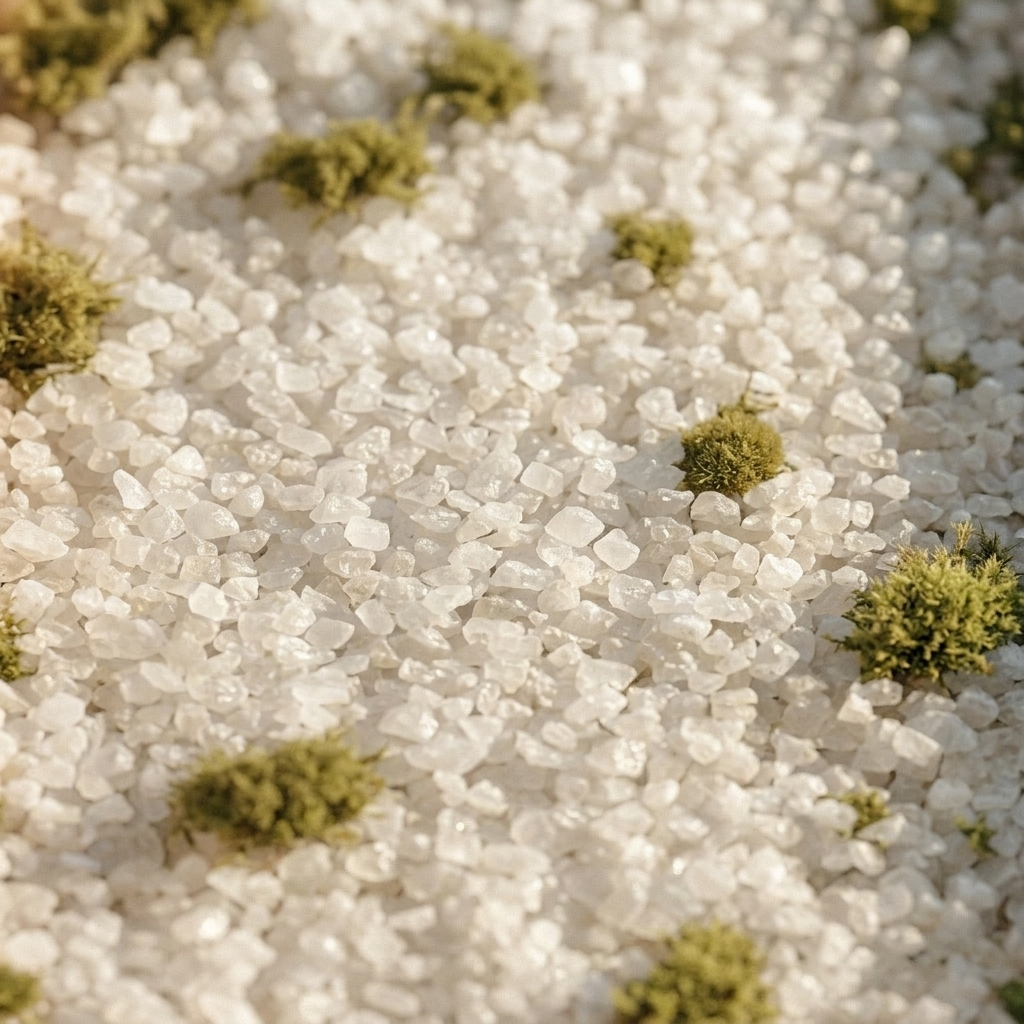
Brine is not brine. The water drawn from the Wieliczka basin carries sodium chloride, but also magnesium, calcium, potassium, iodine and trace sulphates - a composition closer to seawater than to anything in a kitchen. When that solution moves slowly over blackthorn brushwood, the wood does something a nozzle cannot: it spreads the liquid across an enormous, irregular surface and lets evaporation do the atomising.
Particle size decides where air goes
In inhalation science, diameter is destiny. Coarse droplets above roughly ten microns deposit in the nose and throat. Between about one and five microns, particles travel into the bronchial tree. Below one micron, much of what is inhaled is simply exhaled again. Passive evaporative aerosols of the graduation-tower type sit predominantly in the upper range - which is precisely why the historical claim was always about the nose, throat and upper airway rather than the deep lung.
Why the brushwood matters
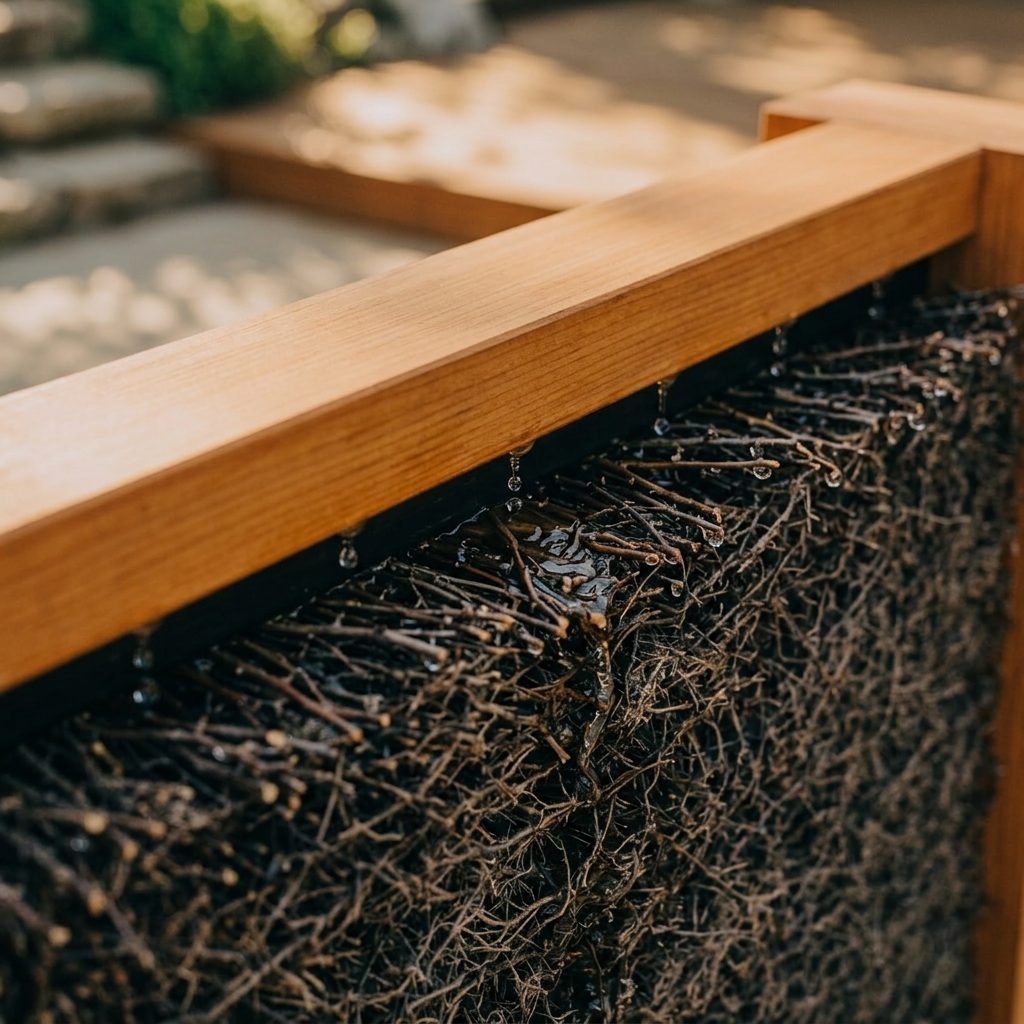
Blackthorn is used for a reason that predates any laboratory. Its dense, thorned structure resists brine corrosion far longer than softwoods, and it packs into a lattice with a very high surface-area-to-volume ratio. Over months, salt crystallises onto the twigs and increases that surface further - the panel becomes more effective as it ages, which is the opposite of how most appliances behave.
The tężnie at Ciechocinek has been running on the same principle since 1824. No pumps at pressure, no atomising heads - just brine, wood, and time.
Humidity is half the story
Evaporation raises the relative humidity in the volume of air around the panel. That is not a side effect - it is part of the mechanism. Dry air increases evaporative water loss from the airway surface, which is one reason heated indoor air in winter feels harsh. Raising local humidity into the comfortable mid-range reduces that loss, and the perceived difference in a single breath is often more about moisture than about minerals.
- Mineral aerosol: sodium chloride plus magnesium, calcium, potassium and iodine.
- Predominantly upper-airway particle sizes, consistent with passive evaporation.
- Locally raised relative humidity in the air immediately around the panel.
- Performance improves as salt accumulates on the brushwood lattice.

None of this is exotic chemistry. It is a very old piece of engineering that happens to align well with what respiratory research says about saline and about humidity - and it works best when you stop thinking of it as a device and start thinking of it as a small piece of coastline you keep by the door.
A note on claims
Salt Wall is a garden feature, not a medical device. Nothing here is intended to diagnose, treat or prevent any condition. If you have a respiratory condition, speak with your clinician.